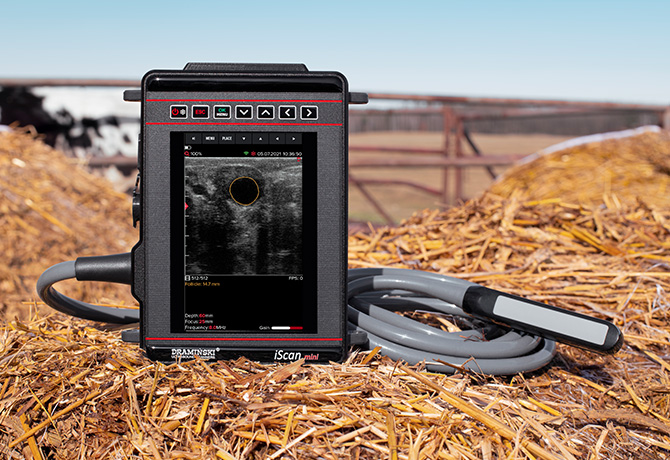
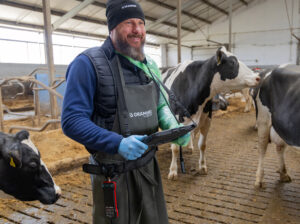
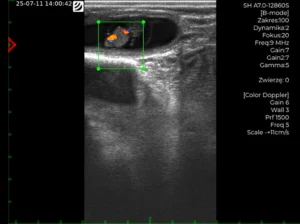
iScan mini – lung examination in calves
Longitudinal dynamics and recovery of lung ultrasonographic consolidations, association with growth in dairy calves in herds with circulating bovine coronavirus and Pasteurellaceae
Subclinical pneumonia is frequently detected in calves; however, its longitudinal dynamics, including recovery during the neonatal period, remain poorly understood. This prospective cohort study characterized lung consolidation dynamics, recovery, and growth in dairy calves from 2 herds with circulating bovine coronavirus (BCoV) and Pasteurellaceae.
A total of 126 newborn calves from 2 dairy herds were monitored using quick thoracic ultrasonography and clinical scoring, with examinations performed twice weekly until one month of age. Based on anatomical landmarks, the lung was divided into 4 quadrants for ultrasonographic evaluation. Lung ultrasound scores (LUS) were defined as 0 (consolidations <1 cm in depth), 1 (≥1 to <2 cm), 2 (≥2 to ≤3 cm), and 3 (>3 cm), based on the most severe lesion across quadrants; calves with LUS 2 or 3 were treated. Recovery was defined as regression to LUS 0 within 3 subsequent visits. Calves were weighed at birth and at 1 and 2 mo using an electronic scale; however, at farm 2, BW at 2 mo was estimated using a weight tape. Average daily gain during the first and second month were calculated.
Pathogen testing for the 9 most common respiratory agents was performed using real-time PCR.
All calves developed lung consolidations of some extent during the first month of life. Overall, 74.6% of calves developed consolidations ≥1 cm (LUS >0) at a median age of 16 d; among affected calves, 97% had subclinical and 3% clinical pneumonia, with maximum LUS scores of 1 (n = 21), 2 (n = 51) and 3 (n = 22). During the first month, consolidations ≥1 cm affected 1 lung quadrant in 33.0% of calves, 2 quadrants in 38.3%, 3 quadrants in 23.4%, and all 4 quadrants in 5.3%. Circulation of BCoV and Pasteurellaceae was confirmed at herd level. Among untreated calves that developed LUS 1 (n = 46), 60.9% progressed to higher LUS scores. Antimicrobial treatment increased recovery odds in LUS 2 (odds ratio [OR] = 3.6, 95% CI 1.3 to 9.9) and LUS 3 calves (OR = 28.9, 95% CI 3.0 to 276.4) compared with untreated LUS 1 calves. Calves with 3 or 4 affected lung quadrants grew 87 g/d less during the first month (95% CI −182.0 to 7.1 g/d), and calves with LUS >0 at 2 visits grew 61 g/d less from birth to 2 mo (95% CI −121.2 to −0.4 g/d). Subclinical pneumonia was widespread during the first month of life in herds with circulating BCoV and Pasteurellaceae, with lung consolidations detected in all calves. Untreated LUS 1 lesions frequently progressed and seldom resolved spontaneously. Early detection and antimicrobial treatment of consolidations ≥2 cm improved recovery, whereas recurrent or multilobar lesions tended to compromise growth.
P.S. Examinations performed using the Dramiński iScan mini portable ultrasound scanner.